


Navigating a powerboat in the Aegean is deeply rewarding, yet the conditions demand judgment, awareness and a calm hand at the helm. Wind, sea state, trim and local geography all shape the way your boat behaves. The notes below offer clear and dependable guidance to support smooth and confident cruising.

1. Understanding Trim
- Trim defines the boat’s running attitude and how efficiently the hull moves through the water.
- Trim In – Bow Down. More hull remains in the water. Ideal when driving into head seas, short steep chop or fresh wind straight ahead.
- Trim Out – Bow Up. The bow runs lighter and the boat becomes more efficient, useful in settled weather or when running with following seas.
- Apply trim in small steps and allow the boat to settle before making further changes.
2. Twin Engines 2 Outboards
- Calm to Moderate Seas. Trim in for acceleration and ease out gradually as the boat approaches reaching optimal running attitude to get on plane.
- Head Seas Wind Ahead. Keep the bow slightly down and ease the throttles to meet the waves with a soft steady rhythm. Use very small trim inputs, one or two clicks bow-down from your normal cruising trim often make a noticeable difference. After each adjustment, wait a moment to feel the response before changing anything else.
- Following Seas Wind Astern. Trim slightly out for controlled bow lift. Keep tabs up except for minor leveling. In steeper following seas, avoid surfing the boat down the face of a wave. Aim to sit on the back of the wave ahead, adjusting throttle so the boat does not overtake it. This reduces the risk of the bow digging in or the hull beginning to yaw or broach.
- Beam Seas Side Wind. Maintain equal trims and adjust course and speed modestly to keep the motion predictable. If the ride becomes uncomfortable, alter your heading a few degrees into or away from the waves. Even a very small change can smooth the boat’s motion significantly.
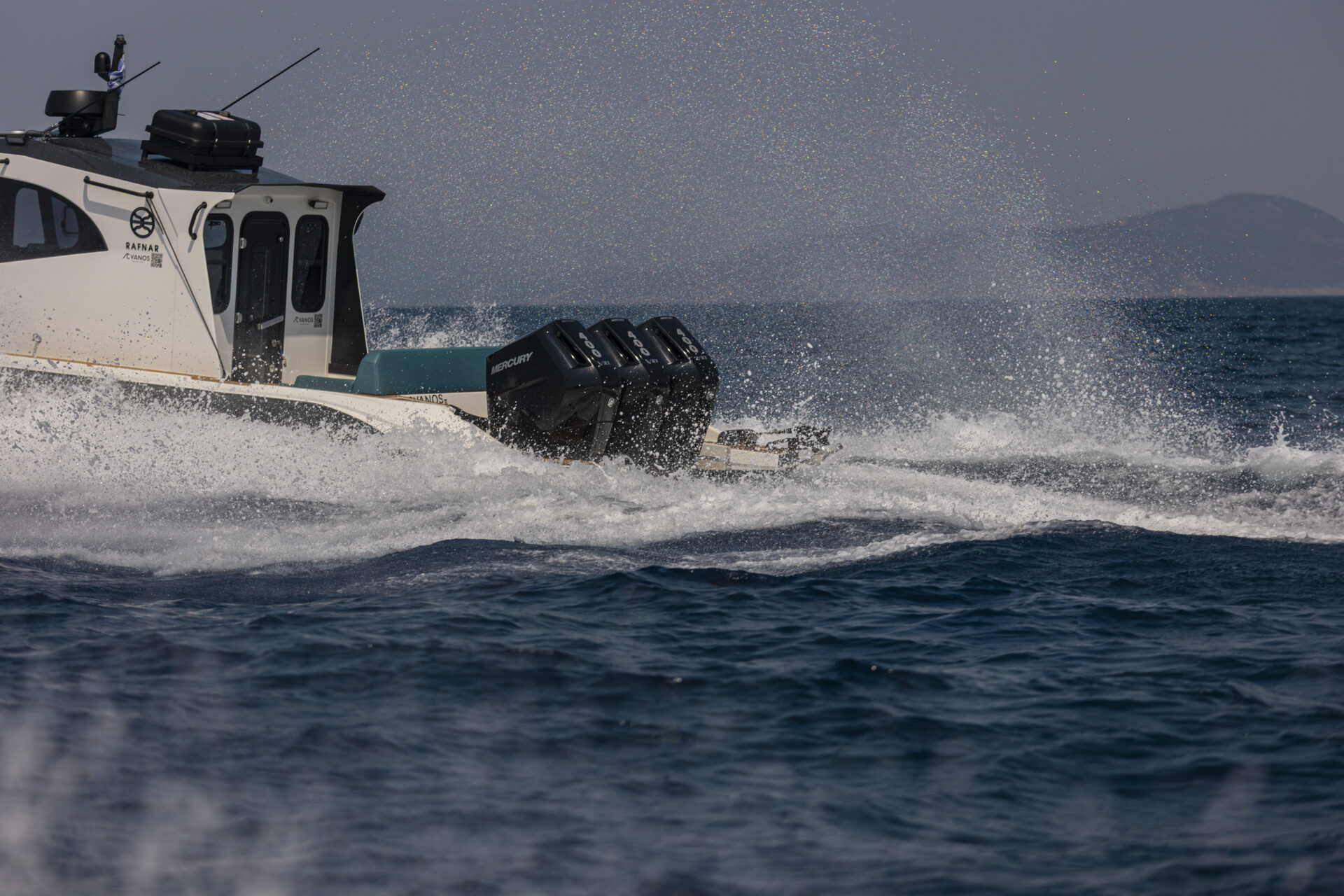
3. Triple Engines 3 Outboards
- General Cruising. Centre engine neutral and outer engines slightly out.
- Head Seas Wind Ahead. With three engines the boat tends to carry more support forward, so use a balanced trim approach. Bring the centre engine slightly in to stabilise the bow and match the outer engines a touch inwards. This keeps the entry soft and controlled. In short, steep Aegean chop, allow the bow to settle naturally rather than pushing it down. Make small trim and throttle adjustments and let the boat find its rhythm.
- Following Seas Wind Astern. Keep the centre engine neutral and bring the outer engines slightly out to maintain a light confident bow. In stronger following winds, avoid letting the boat surf onto the wave ahead. Adjust throttle smoothly to remain on the backside of the wave where the boat feels settled and predictable. Tabs stay up unless minimal leveling is needed.
- Beam Seas Side Wind. Triple engines generate more side force due to their wider stance. Keep all trims equal and use one or two clicks on the windward outer engine to counter any heel caused by crosswinds. If the movement becomes uncomfortable, alter your course a few degrees until the boat settles into a calmer angle.
4. Inboard Outboard Sterndrive Engines
- Sterndrives offer the stability of inboards with the precise trim control of outboards.
- Calm to Moderate Seas. Trim in for acceleration and ease out as the boat reaches its optimal running attitude.
- Head Seas Wind Ahead. Use gentle bow-down trim for a softer controlled entry. Combine with mild tab use where needed. In short steep Aegean chop, reduce throttle slightly before meeting the steeper crests then ease power back in as the bow clears the top. Smooth inputs maintain stability and comfort.
- Following Seas Wind Astern. Trim slightly out to keep the bow light and let the hull settle naturally on the back of the wave ahead. In fresh following winds, avoid building excess speed down the wave face. Maintain a steady rhythm with gentle throttle corrections to keep the boat tracking straight and reduce the risk of broach.
- Beam Seas Side Wind. Sterndrives are sensitive to crosswinds. Keep the trim level and use small tab adjustments on the windward side to counter lean. If rolling becomes uncomfortable, alter your course a few degrees until the movement becomes more predictable.
- Low Speed Manoeuvring. Steering remains accurate. Use light throttle pulses and neutral trim for tidy control.
5. Understanding Trim Tabs
- Trim tabs refine the boat’s attitude by adjusting bow height and side to side balance.
- Tabs Down lowers the bow
Tabs Up raises the bow
Independent use corrects list caused by wind or uneven loading - Use measured adjustments and avoid over correcting.
- Correcting List
Lower the windward tab to level the boat. - Head Seas
A touch of tab softens the entry but avoid pushing the bow too far down. - Following Seas
Tabs generally remain up for safety and stability. - Beam Seas Side Wind
Use the tabs primarily for leveling working with gentle helm input. - Heavy Loads
When carrying extra weight, a touch of tab helps the boat reach optimal running attitude to get on plane more easily. If the bow feels reluctant to rise, ask one or two people to move slightly forward. Once settled on plane, reduce tab and fine tune trim for a smoother and more efficient run.
6. Throttle Management
- Smooth throttle control is as important as trim and course adjustments. Use small progressive changes rather than sharp increases or reductions in power. In head seas, ease the throttles slightly before meeting the steeper crests then bring them back up gently as the bow clears the peak. In following seas, maintain a steady rhythm so the boat stays comfortably on the back of the wave ahead without accelerating down its face. Balanced throttle work keeps the hull in harmony with the sea and avoids sudden motions.
7. Using Aegean Geography Wisely
- Keep a comfortable distance from the coast
Close to shore, waves often turn confused and unpredictable. A moderate distance offshore usually offers cleaner steadier water. - Choose the Leeward Side
During meltemi periods the sheltered downwind sides of islands and capes provide calmer conditions. Planning with these in mind transforms both comfort and safety. - Shelter from Island Landforms
Cruising near the leeward side of individual islands often provides natural protection from the wind and eases the sea state. Each island creates its own area of calmer water downwind offering smoother and more predictable running.
8. Reading the Sea
- A good skipper constantly reads the sea ahead. Watch the height spacing and direction of the waves and anticipate your adjustments.
- Speed reduce before pounding begins
Trim bow down for head seas and bow up for following seas
Course small angle changes often improve comfort
Tabs use them to level the boat without forcing the bow too low - Small early corrections maintain comfort reduce stress on the hull and keep the day enjoyable.
9. Practical Examples
- Approaching a steep head sea north of Syros
Reduce speed into a comfortable rhythm and bring the bow slightly down with small trim inputs. Let each wave come to you rather than pushing through it. Gentle throttle adjustments and small course changes can transform the ride. - Running leeward behind Paros during a strong meltemi afternoon
Use the island’s shelter to enjoy flatter water. Keep trims neutral to slightly out and let the boat settle into a relaxed cruising attitude. As you exit the lee, expect the sea to rise again and prepare with small throttle and trim corrections. - Crossing a choppy beam sea between Naxos and Iraklia
Hold equal trims and apply light helm pressure to stabilise the boat. If the motion becomes uncomfortable, alter your course a few degrees until the ride becomes predictable and smooth.
Epilogue
Good seamanship is built on calm decisions steady practice and a quiet respect for the sea. In the Aegean these qualities make every mile not just safer but more rewarding.